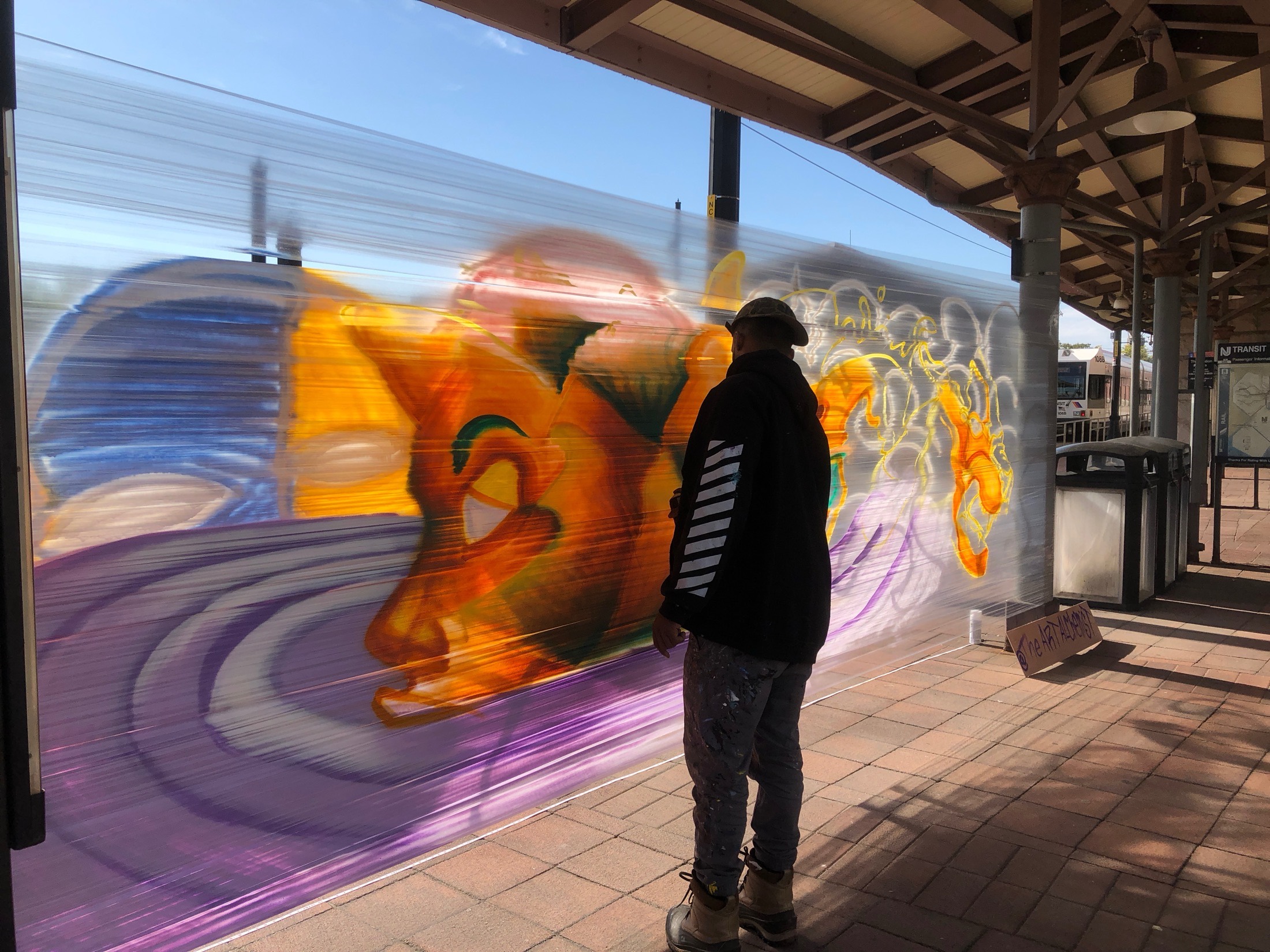
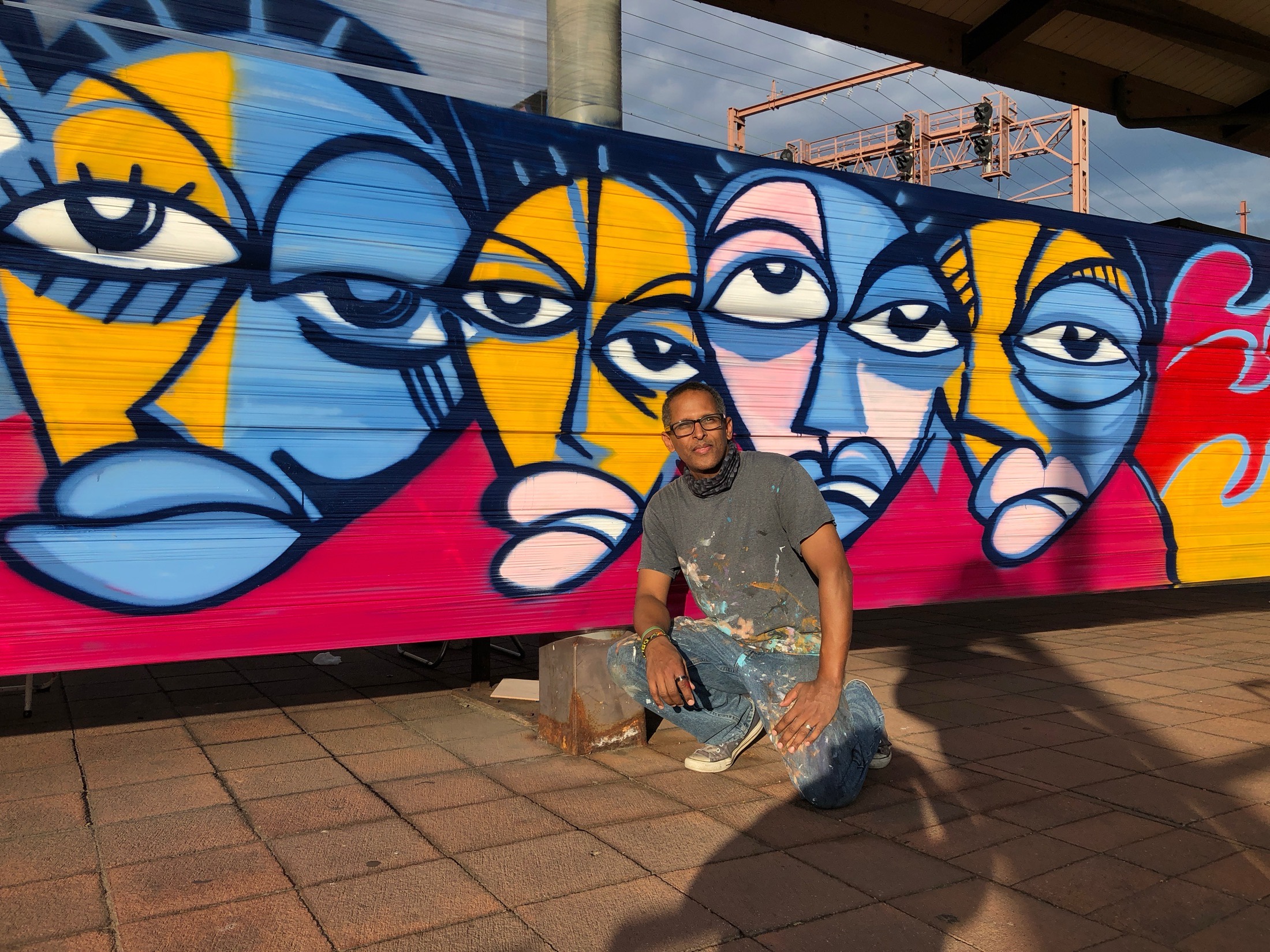
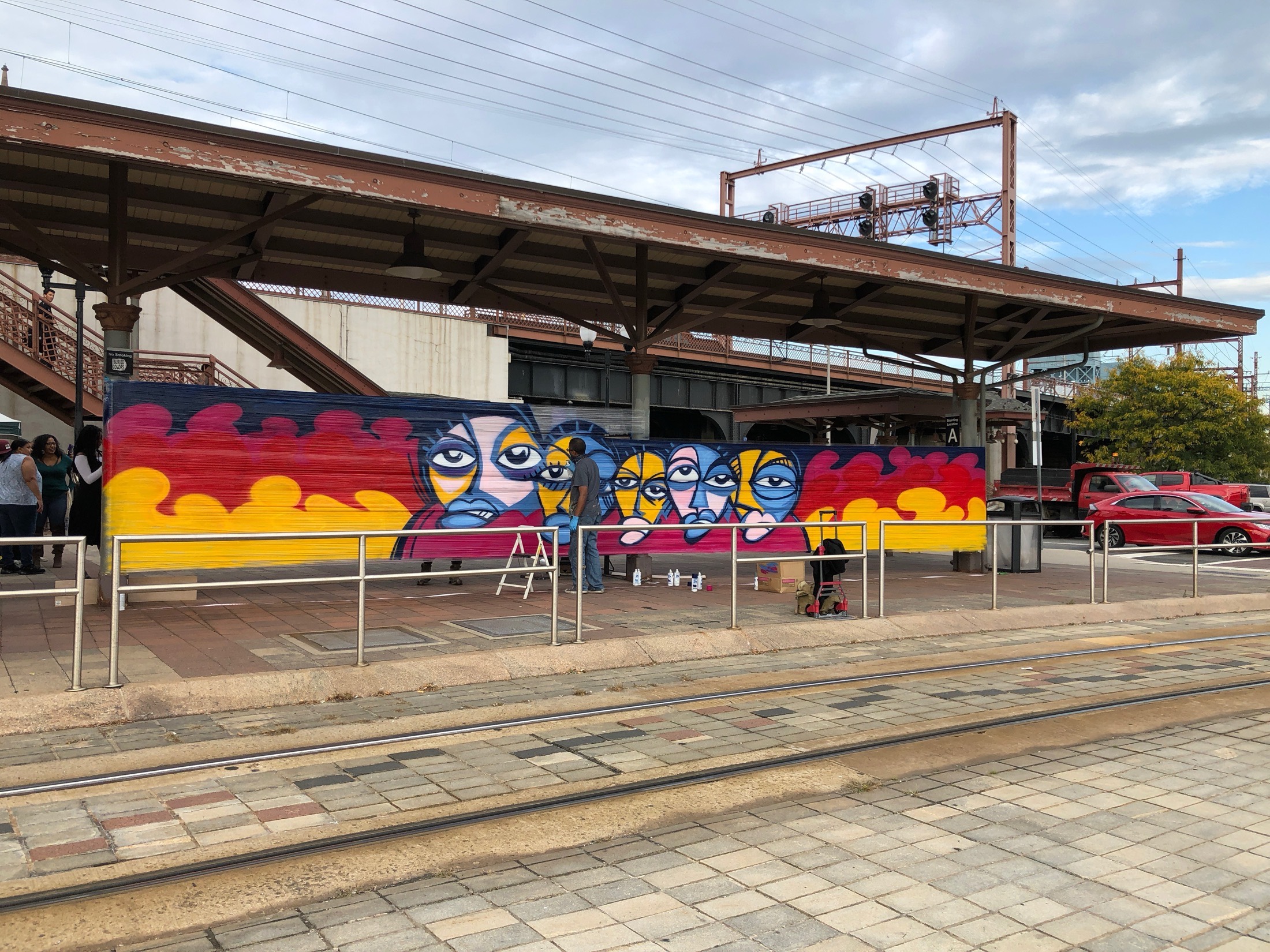
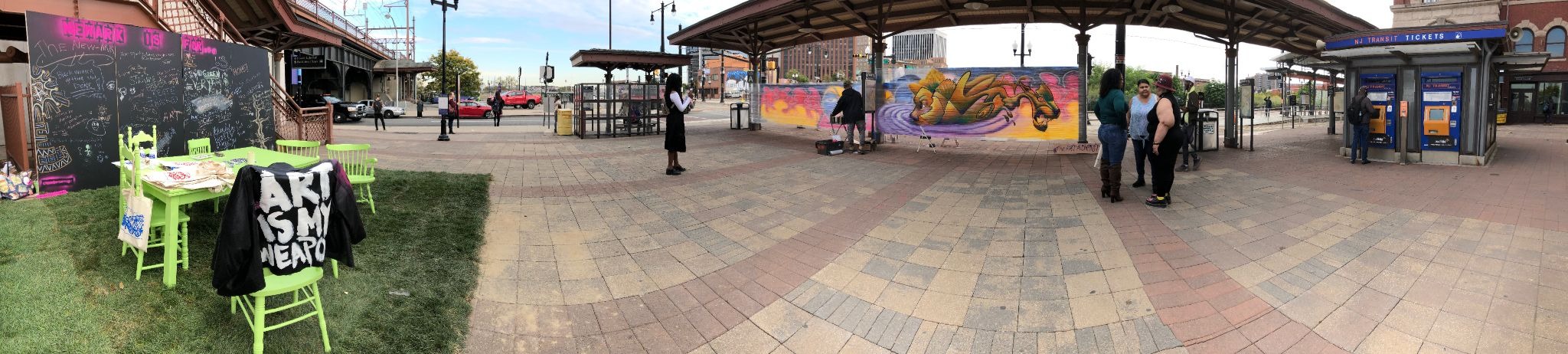
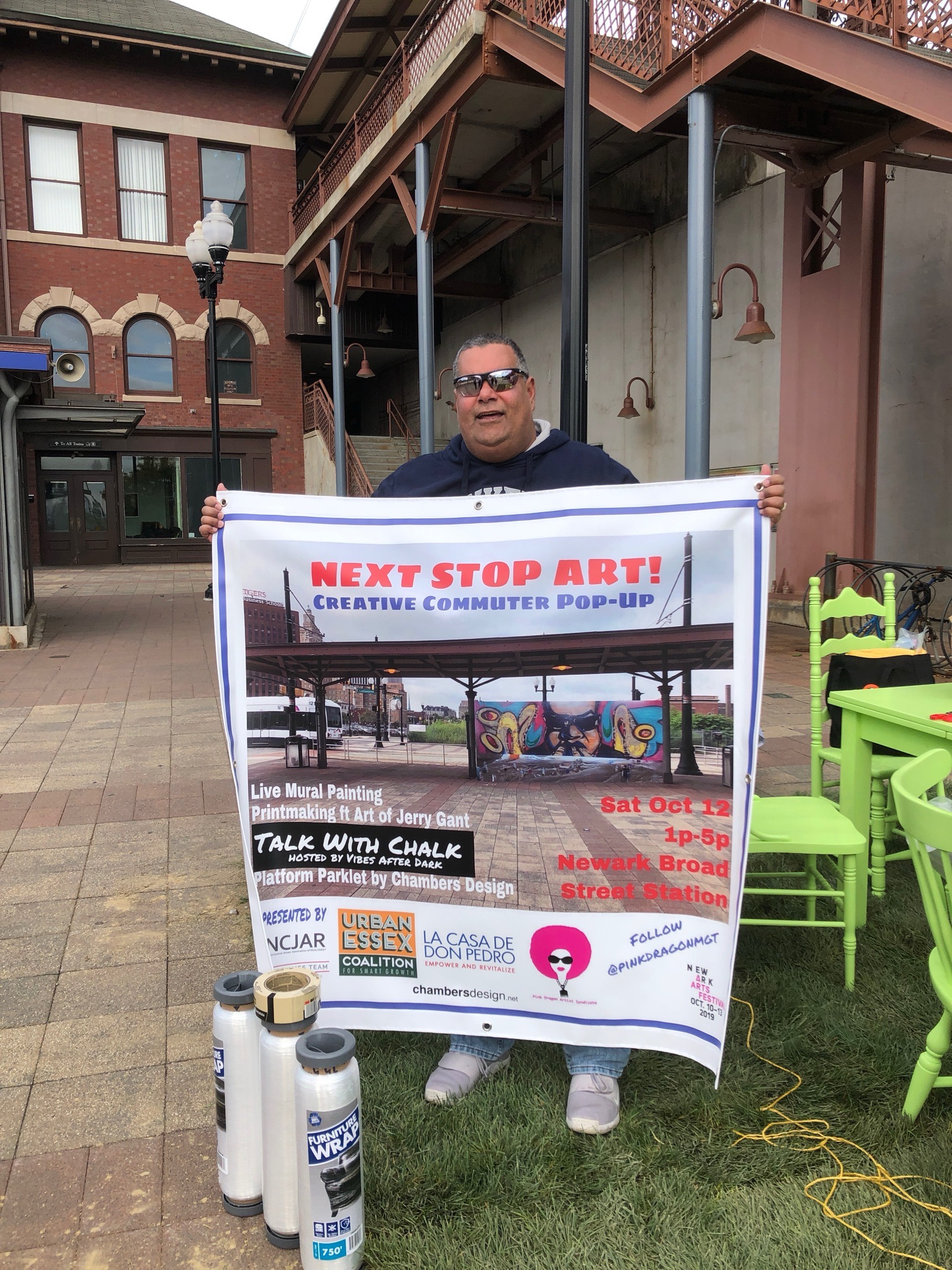
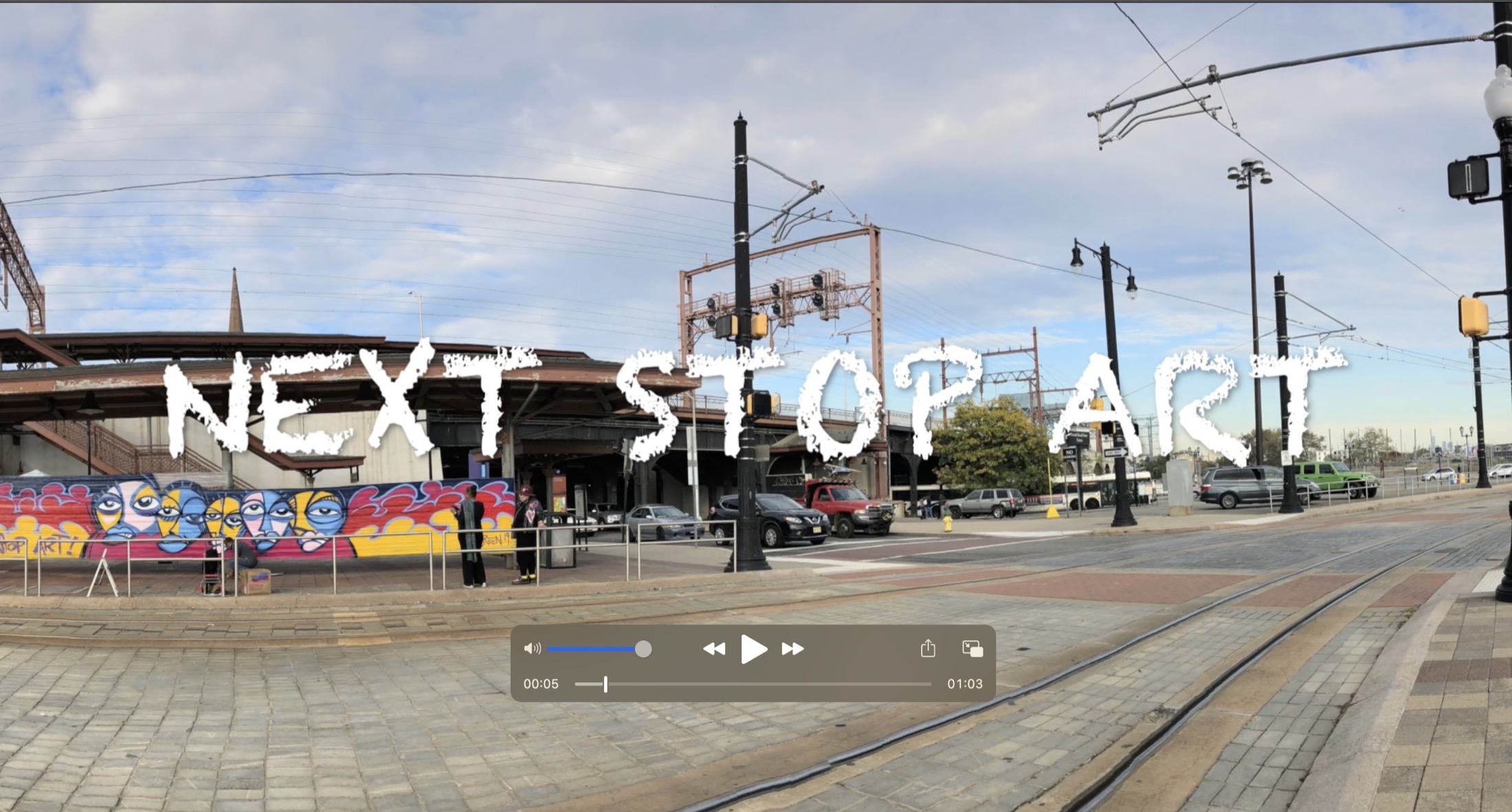
A creative placemaking activation at the NJ Transit Newark Broad Street Station, spearheaded by Urban Essex Coalition for Smart Growth to demonstrate the power of public art to temporarily transform the transit hub into a community gathering place.
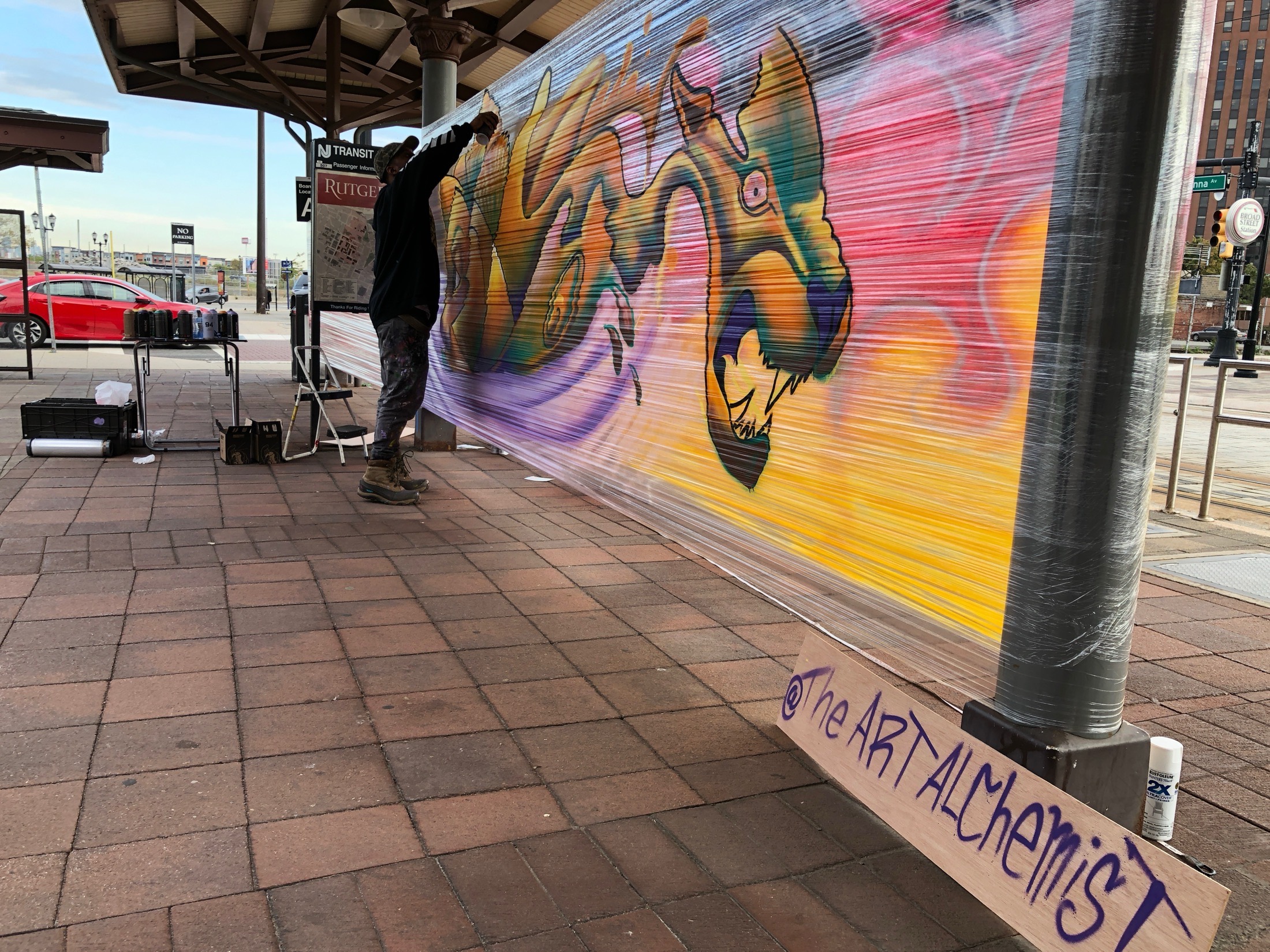
Newark's Broad Street Station — one of the busiest transit hubs on the NJ Transit Morris/Essex corridor, connecting light rail, elevated rail, and bus service — had long functioned as a pass-through space rather than a community asset. For residents of the surrounding Lower Broadway and Downtown Newark neighborhoods, the station and its approaches felt unsafe, unwelcoming, and disconnected from the civic life of the city.
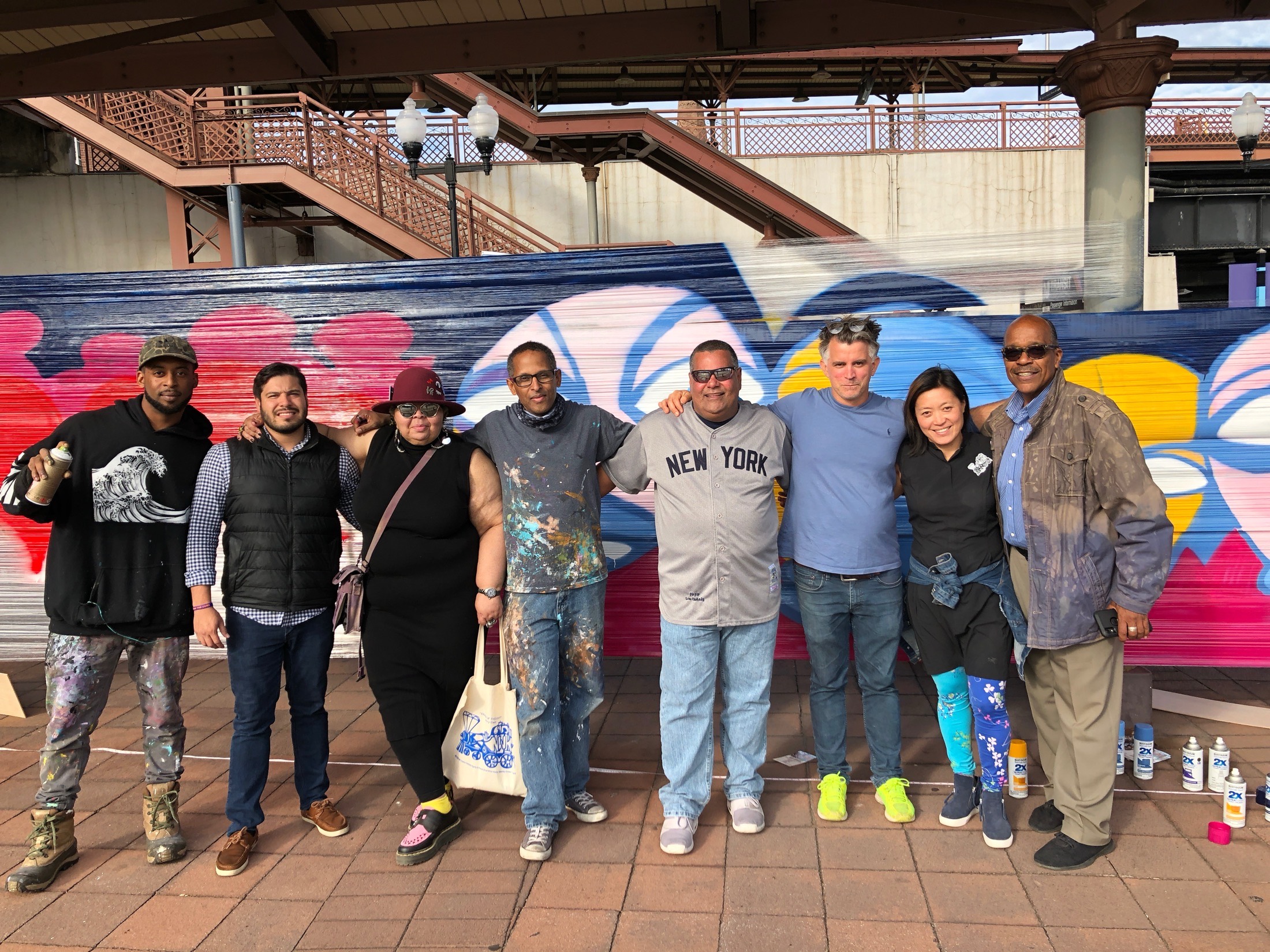
As part of a multi-city initiative led by Urban Essex Coalition for Smart Growth to activate transit spaces along the Morris/Essex corridor, Lillian Cho of ThirdSpace Partners partnered with Linda Street of Pink Dragon Artist Syndicate (PDAS) to coordinate artist selection, community outreach, event logistics, and partner communications — transforming Broad Street Station into a temporary, festival-like cultural space.
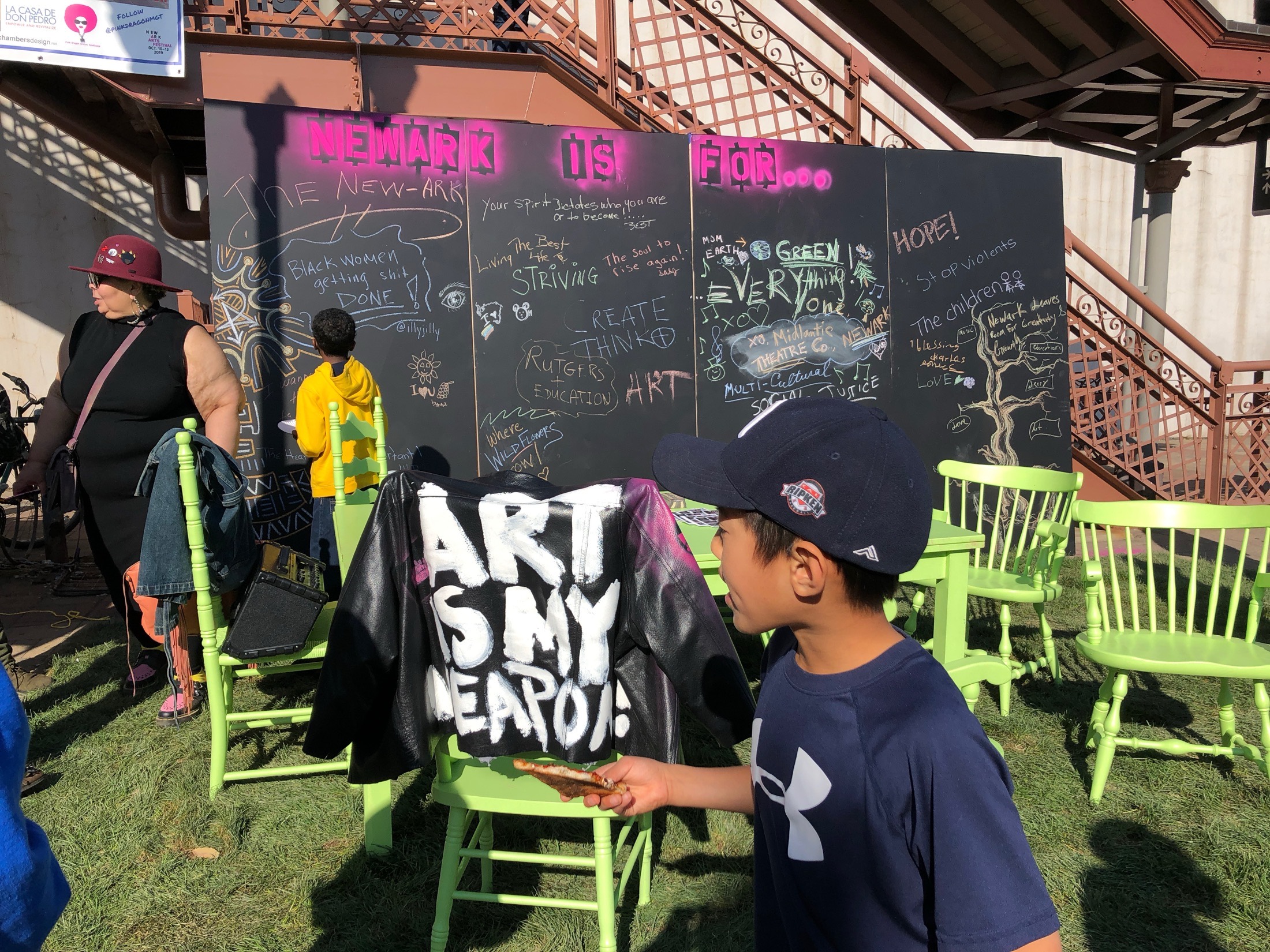
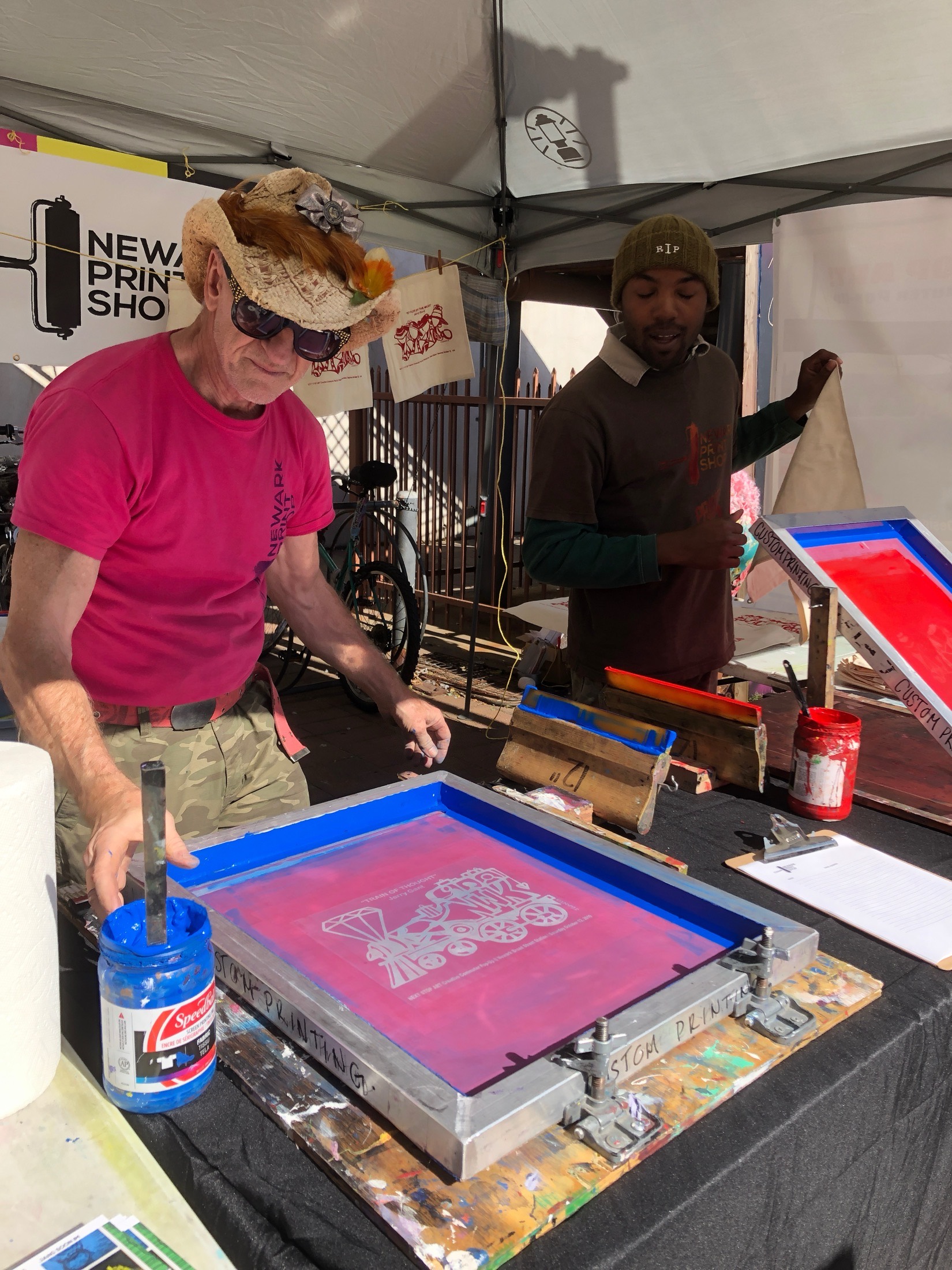
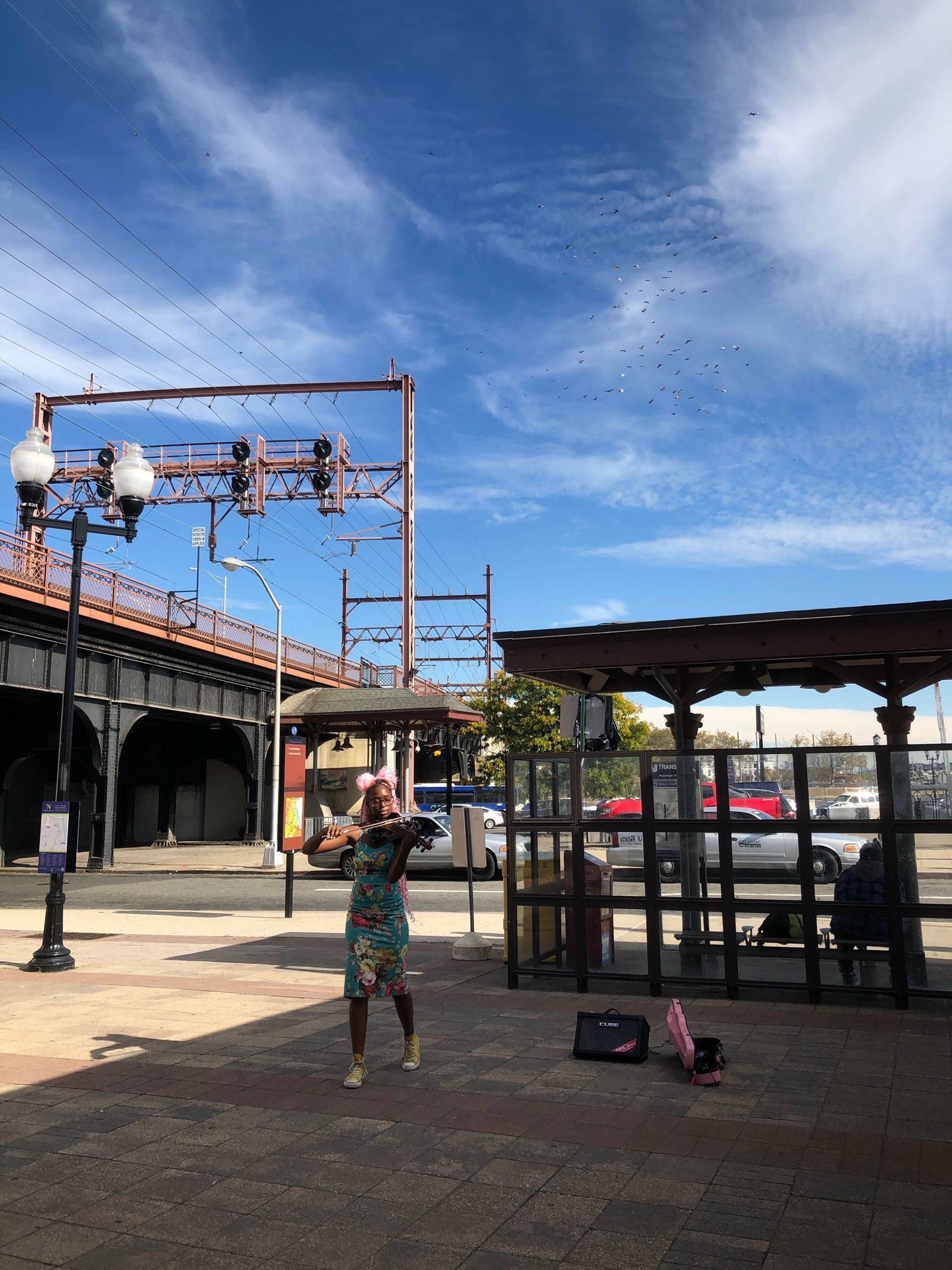
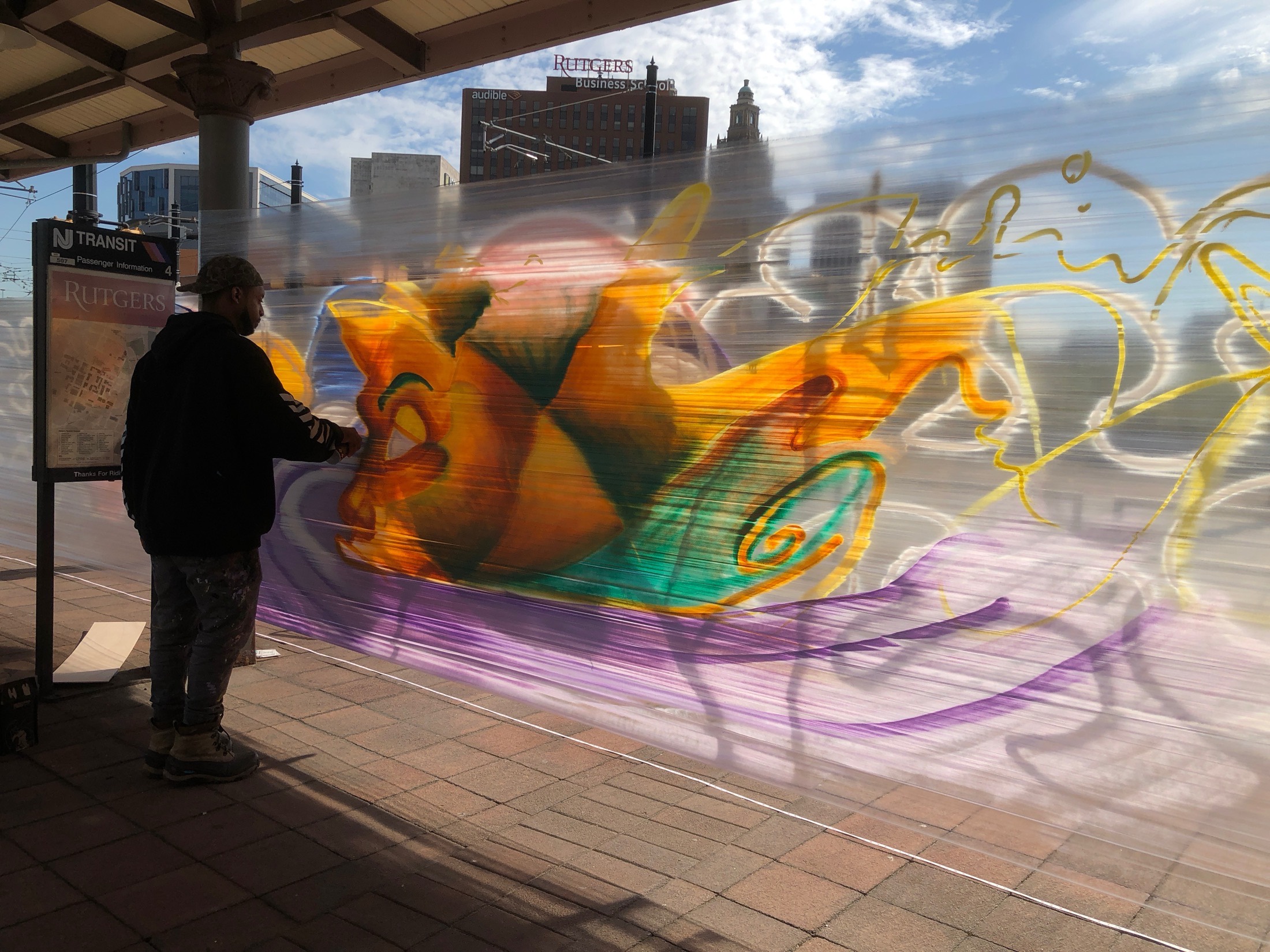
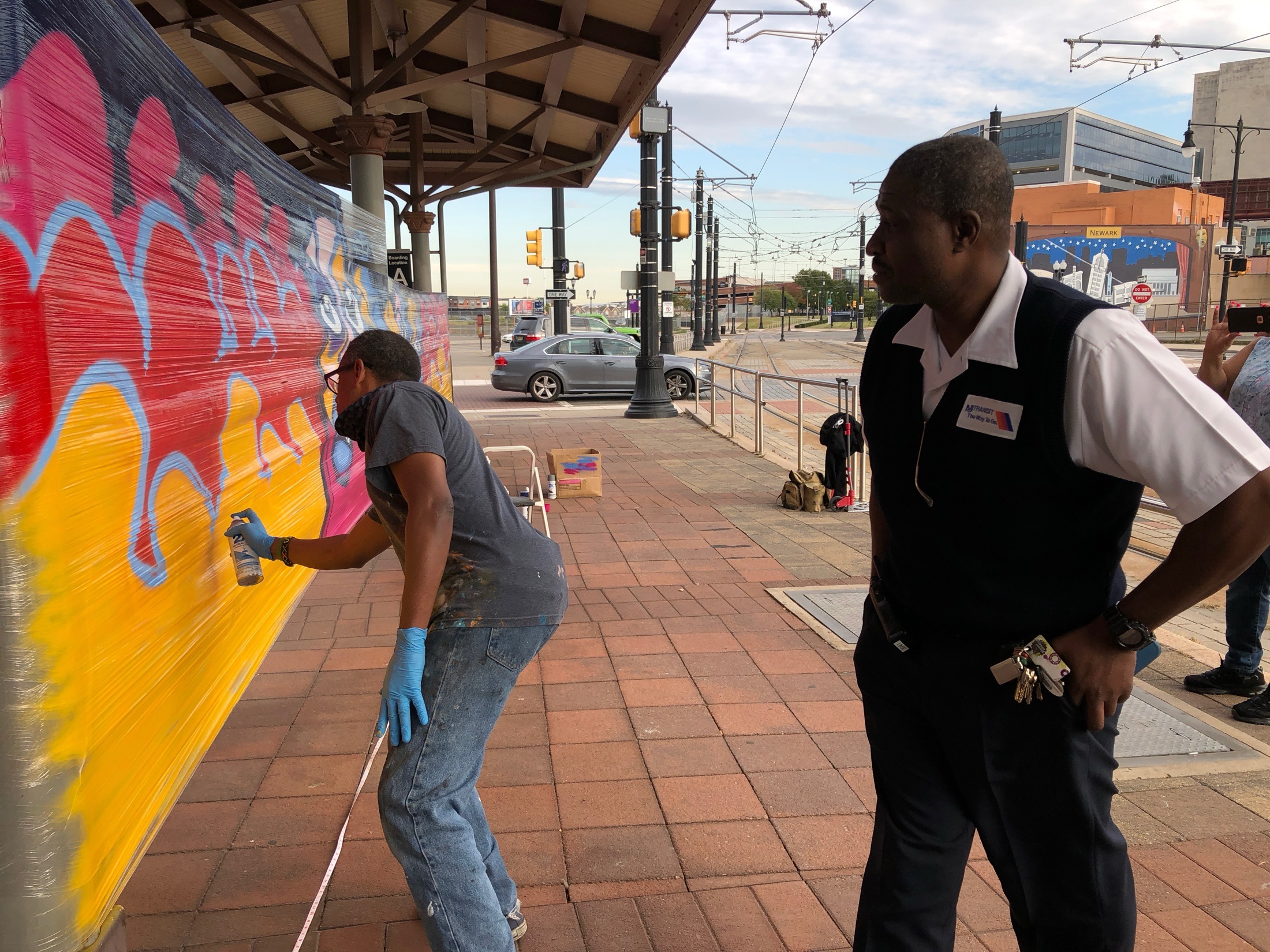
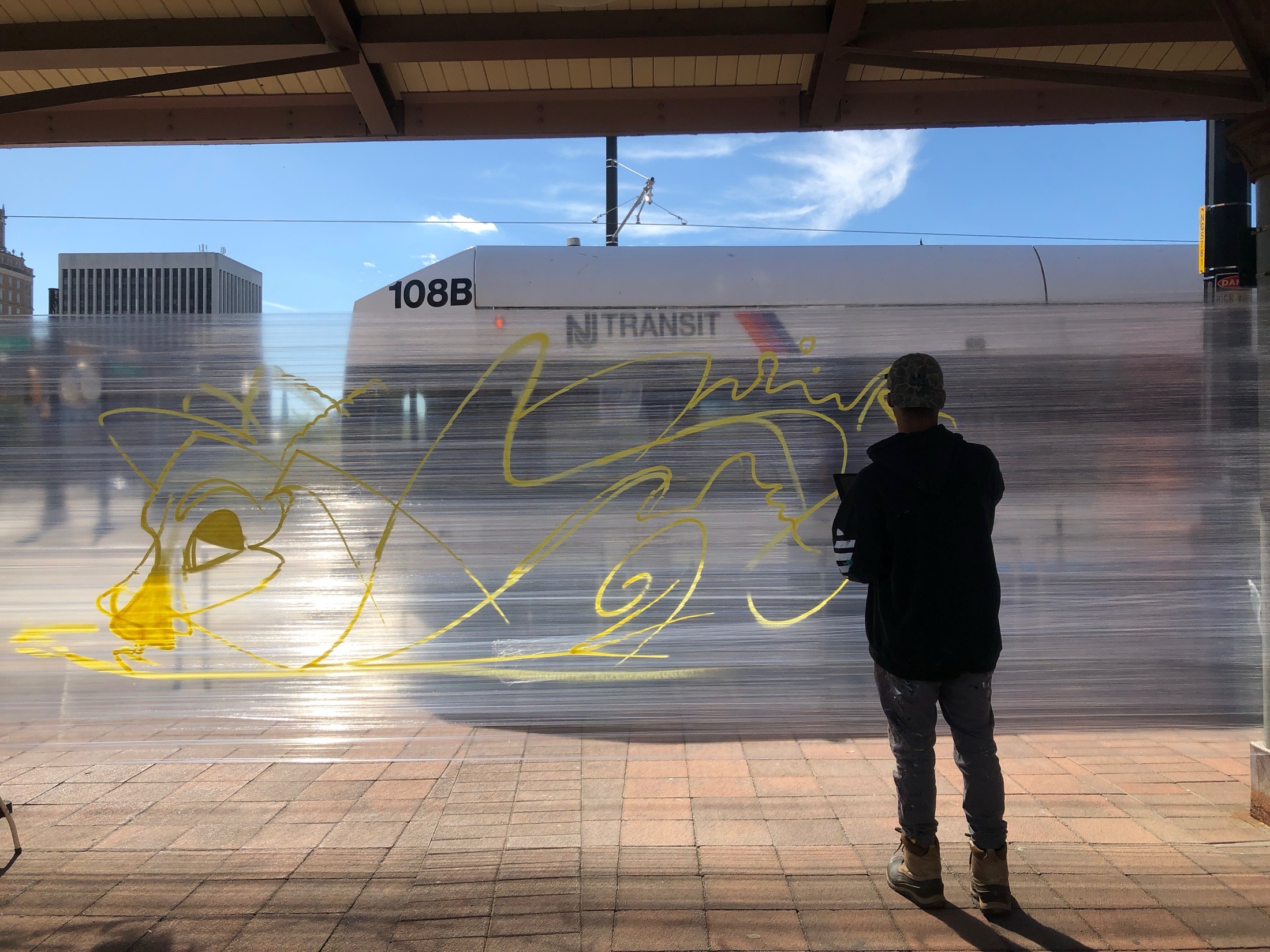
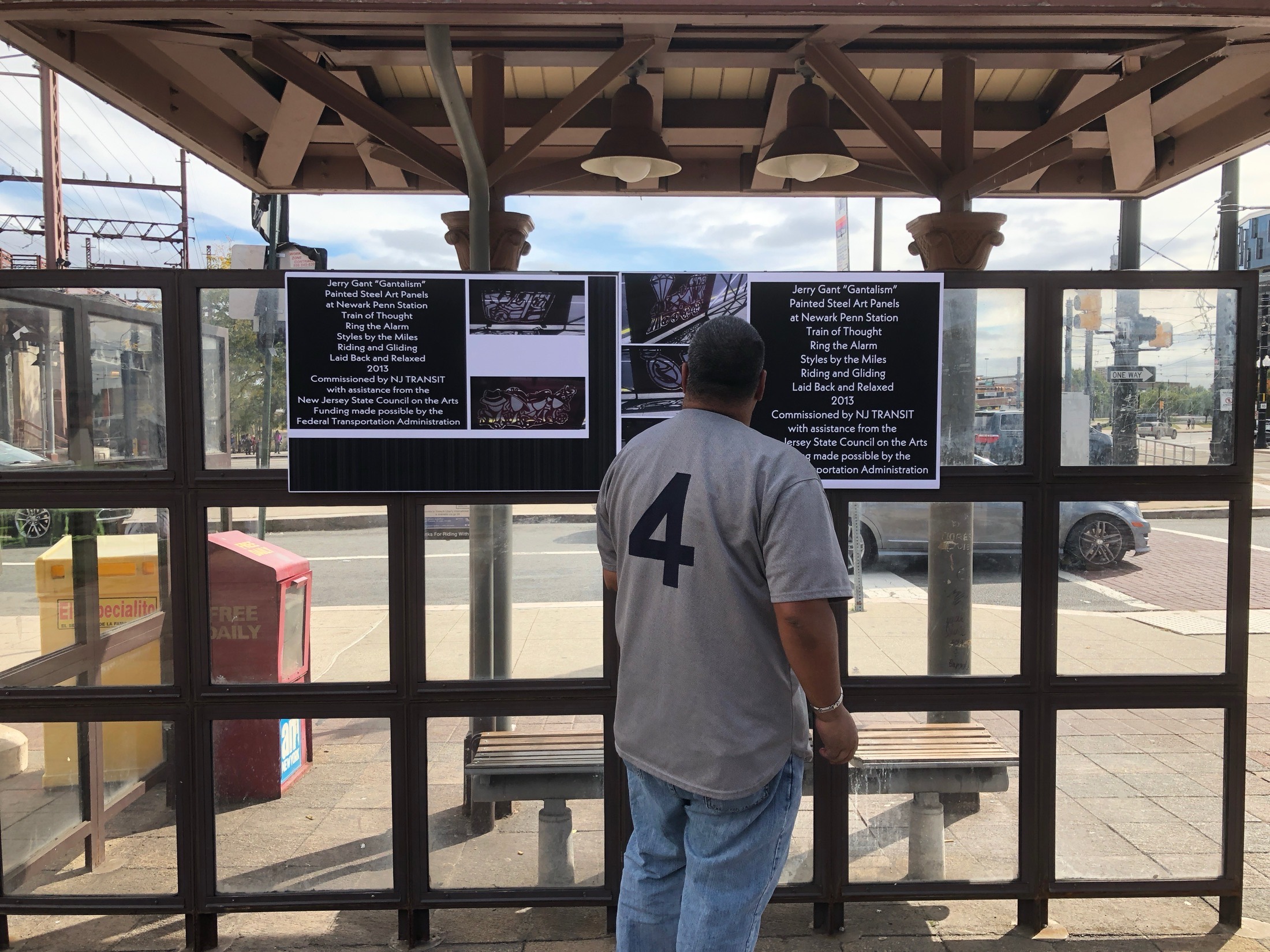
On a single October afternoon, mural artists Steve Green and Elijah Minton painted large-scale works on the station platform, performer Zunyda played violin for waiting commuters, and Newark Print Shop ran a live silkscreen printmaking workshop featuring artwork by the late Jerry Gant — a Newark native son whose own work had graced NJ Transit commissions. A giant chalkboard invited passersby to complete the prompt "Newark Is For…" — turning a mundane transit platform into a lively, participatory community gathering place.
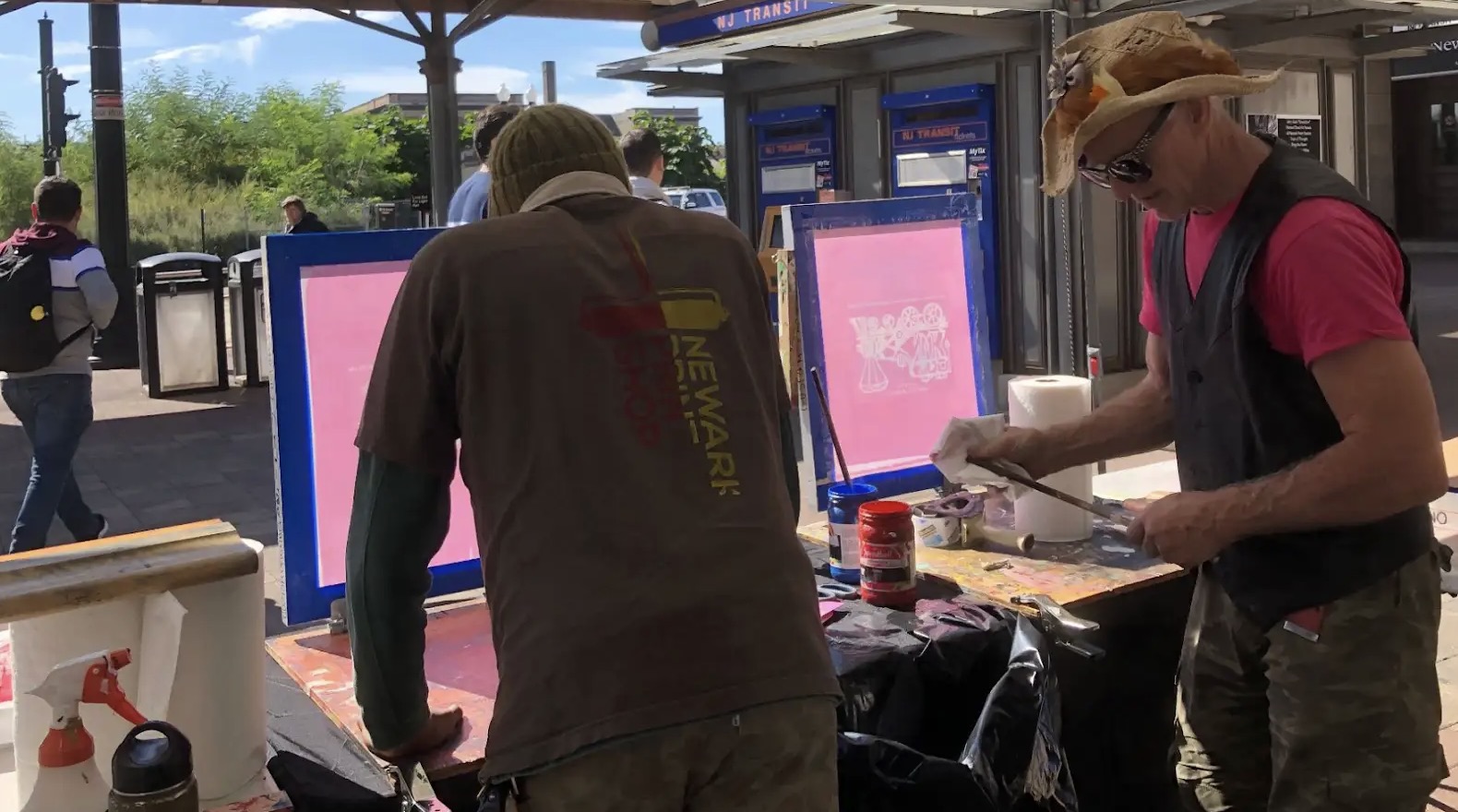
"The activation of the 'dead space' in and around the Broad Street station with arts and culture can play a significant role in the revitalization of the neighborhood."
— Louis E. Prezeau, Jr., Director of Community & Economic Development, La Casa de Don Pedro
The one-day pop up event engaged more than 150 participants across all ages – from young children to senior citizens, alongside 15 professional artists and 18 community partners. An elderly resident asked if it would be happening all week.
Informal conversations with attendees also surfaced immediate safety and walkability concerns — demonstrating art's unique ability to open community dialogue about infrastructure needs that planning meetings rarely reach. The project proved that even a temporary, low-cost intervention can fundamentally shift how a community sees and experiences a public space -- and laid the groundwork for future larger-scale corridor activations.